







News & Features

D23 Presents: Cinderella Stories

10.17.12 – JP O’Connor tells D23 about some of her favorite memories growing up with her parents: Disney Legend Ken O’Connor and a real-life Fairy Godmother.


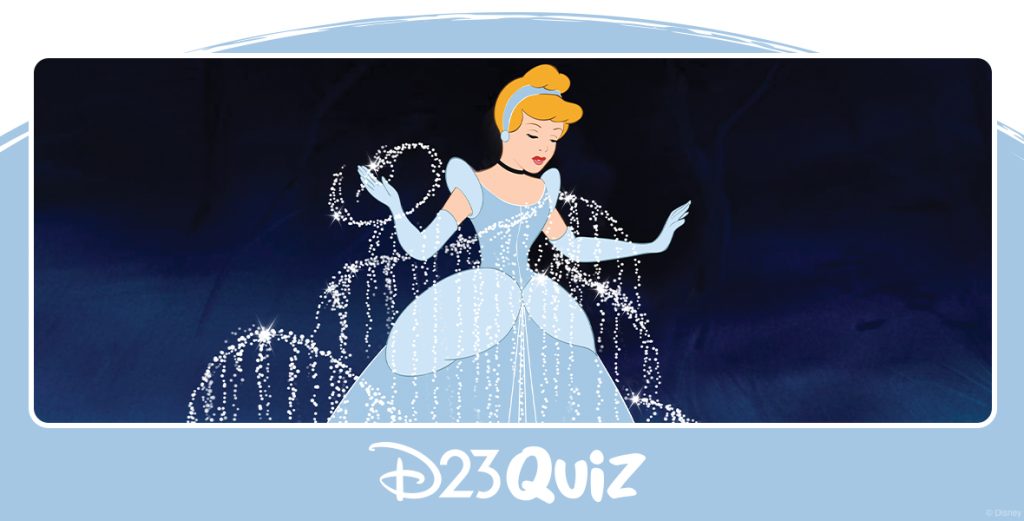
The release of Cinderella on Blu-ray on October 2 was about more than just a stunningly remastered film, available for a limited time from the Disney Vaults. It also included several all-new bonus features—among them a featurette entitled The Real-Life Fairy Godmother. What fans of Cinderella (and Disney animation, in general) might not know is that the kindly lady with the magic wand—who helped Cinderella get ready for the ball and find her Prince Charming—was actually based on a real person!

The featurette follows the story of Mary Alice O’Connor, who was not only the inspiration for Cinderella’s Fairy Godmother, she really was a “fairy godmother” of sorts. She volunteered tirelessly in several California communities for most of her life. President Gerald Ford honored her at the White House in 1976 for her contributions, and she even has a building named after her (the Mary Alice O’Connor Family Center, a pre-school) in Burbank, California. Mary Alice passed away in 2010, at age 93.

It was Mary Alice’s husband—layout artist, CalArts instructor, and Disney Legend Ken O’Connor (who passed away in 1998, at age 89)—who had the foresight to predict what his wife would look like as an older woman, and he used that as the basis for the genial godmother in the classic 1950 animated film. He was surprisingly accurate!

D23 recently had the honor to sit down with Ken and Mary Alice’s daughter, JP, for an interview about her parents’ marriage, her father’s amazing career with Disney, her mother’s volunteerism, and much more!

D23: How did your parents meet?

JP O’Connor: As my mom says, “It was a put-up deal.” Dad was working at Disney, and he had a good friend who was also at the studio who knew my mom, and they were casually dating—nothing serious. They were just friends, their parents knew each other. But the mother of this man looked at my mom, and knew my father, and said, “Hmm, I think there’s something there.” So the mothers conspired to have them come for tea, and my mother is reported to have said, “I will not go to a put-up deal! This is ridiculous!” And by the end of the tea, as my dad left, my mom turned to my grandmother and said, “I’m gonna marry that man…”

Mom was living with, at that point, [actor] Basil Rathbone and his family… She lived with a lot of the early Hollywood families, running their households, planning events… and [while] with the Rathbones, she got all the actresses and the young dancers for their USO Canteen events. I know she was with them before she and my dad married because Basil one day said, “For god’s sake, Mary, marry the man!” And she said, “I’m trying!”

Your father was already working for Disney when your parents wed, right?

Oh yes, for almost a decade. They got married in ’44; he started at Disney in the early- to mid-’30s—he was at the Hyperion studios. He’s actually sometimes called the “Tenth Old Man” because the Nine Old Men were the animators—and at that point he had moved to layout and art directing. And in my father’s very droll, British humor, he always said, “Nobody knows what layout is. They think I work in a funeral parlor!” A lot of people didn’t know layout. So he was really the first one that set the stage, for all the animation to “act in,” as an art director. So he was there from the very beginning.

Can you tell us how your father started working for Disney?

[Ed. note: Born in Perth, Australia, in 1908, Ken studied commercial art at Melbourne Technical College and fine art at the Australian National Gallery in Melbourne. He and his family moved to the United States, settling in San Francisco in 1930; he then continued his education at the California School of Art.] I think his very first memories were… he was coming south with his father, who was in San Francisco at that point as a tourism representative for the country of Australia. And his father said, “There’s some guy doing some ‘cartoon-y’ things down in L.A.; do you want to take the Model T and come with me?” Those stories are funny too. But they got here and Dad took his portfolio over and met Walt, and Walt had a habit at that point of putting all the potential artists in a room and making them draw “roto-vision” drawings endlessly—for weeks. Which was enough to drive most creative people quite stir-crazy. But Dad did it, and he succeeded well, so that’s how he passed the test.

So he worked on Snow White?

Yes… he [talked] about the days of Snow White a lot because that was a huge gamble—not only for Walt Disney, but for everybody. Because everybody took cuts in salary, everybody worked almost for free. And if it had gone bust… It was a huge gamble; nobody knew if anyone would sit still for 90 minutes of animation. And if it hadn’t worked, they would’ve all been out of jobs—end of story, studio closed, that’s it. He had great praise, always, for Walt. I think what he thought, especially from the very earliest days, is that Walt had an amazing sense of what an audience would want.

And was your dad involved in Fantasia?

He worked a lot on Fantasia! I think [the animators] really loved that film; they loved being able to interpret the music. And I’m very proud that Dad’s scene in Fantasia is one of those really iconic scenes that when they teach animation, they always show it. Because he did The Dance of the Hours, with the hippos and ostriches. And it’s the whole link between music and subliminal impressionism… as the music escalated, the power of the lines escalated… I think where Dad excelled is that his sense of drama was phenomenal—and the scenes that people remember are very dramatic because of the angles and the things he used in them. He had a lot of fun working on that.

Did your mother have a favorite memory from the early years?

I think some of the most fun we had when Dad was working, along the way, was when he was doing the Disney educational films with the space scientists. Wernher von Braun and Willy Ley and [Ernst] Stuhlinger and all the names of the very early space program were here—hangin’ out in our house! My mother was always focused on hospitality. She was gracious… and she realized that these men had left their family, they were working hard all day; they would go home to a hotel in Hollywood, and she thought that was terrible. And they often had to eat and then go back to work. So she would have everybody over, and we have some of the funniest pictures in the world… here are these world-famous scientists who’ve managed to figure out how to get us into space… We had a different pool configuration here [back then], and they were hangin’ out in the pool! She said, “I’ve never drunk beer, but I learned a lot about German beer!” She studied all these recipes and would make them bratwursts and knackwursts and whatever-wursts… She loved that time.

Can you tell us about your father’s work on the Fairy Godmother for Cinderella?

It was hard to get the look that they wanted. And if you look at some of the early drawings, she went from… [looking like] Maleficent—that very wicked, spiky sort of person—to highly silly. They couldn’t get it. And in those early days, because they all knew each other—Dad wasn’t a character designer… but often they’d help each other out. There was a real spirit of collegiality there. And everybody knew Mom… and they thought about what they wanted the “spirit” to be. And so Dad, one day, was sitting around and thinking, well, there’s another part that’s sort of funny. When he was going to marry my mom, my dad was very orderly and thoughtful and he had made a list of things about her. And one of the things he knew was, from our heritage, that probably Mom would [grow to be] generously proportioned when she was older; she was thin and very spectacular when she was young. And yet, he thought that that was going to be wonderful—it would be embracing and warm and “zaftig.” And he equated, in his life, that in doing that, you’re healthy…

But it was her spirit that captured [him, for the Fairy Godmother]. So he took a drawing in of what he thought embodied that character—and it was his imagination of how she would look when she was older. And they refined it a little, but the animators all went, “That’s it!”

What about Cinderella’s coach? He helped Walt Disney create that too, correct?

Dad loved to do woodworking. He was an inventor, he liked to create 3D things and tools and all sorts of things. So we had a full-on workshop in the back; we had forges and jigsaws and lathes and everything else. My father went out one night and decided to carve a coach. He had thought about what it would look like, and made a scale model of the characters. And he thought that if he’d put it in a scene, it would help Walt envision how it could turn into something… The horses are obviously big, but they’re supposed to be because they were fanciful enlargements of small animals. So he set the coach with a fountain and the things that he envisioned—because he was going to do the “scene,” and he took it in. It clicked! They had had other drawings too, of pumpkins. Should [the coach] stay orange? How would you do that? And no one had thought of turning the vines of a pumpkin into the wheel, and he envisioned how that could work…

Your mother was known as the unofficial “Fairy Godmother” of Burbank. Was she always civically minded?

She came out that way, I think, from birth. Her family had always looked to serving others, but she also loved it. And I think why she—she almost never was president of anything. She didn’t need to have a leadership role; it wasn’t for power, control, or anything. What really made Mom different is she wanted to enable others to act. And that’s where I compare her to the Fairy Godmother—because the Fairy Godmother didn’t make Cinderella something, she gave her the tools to make herself something. And that’s really what Mom was all about. She would listen like somebody who loved you, like a Fairy Godmother would listen… and she would ask just the right questions to make you figure out something… She always saw the good thing; she saw the possible. And when other people absolutely couldn’t see it, she knew how it would work, and she could get people to do it. She literally never said a bad thing about anybody. Everyone will tell you that it’s true. She could always find something good in them, and encourage them. That works well with volunteers, and it works well in solving problems—because she looked at lots of angles. I think when you’re worried about who gets the credit, many things don’t happen. And for her, she didn’t care. She wanted to enable.

Can you tell us a bit about the Mary Alice O’Connor Family Center?

We actually announced that it was being named for her in a big rush; it was in May a year before because it looked like [her health was declining]… And we had to trick her, which was almost impossible to do. Because we wanted to get her up to [Burbank] City Hall. And so I said, “Mom, they’re going to have some people who’ve been lead volunteers at the City Hall at this next meeting, and they want people to share their experience and encourage people to volunteer.” She said, “Well, why do they want me?” “Well, maybe because you’ve been involved with more than 90 groups!”

So she said, “Well, okay.” So that day, we got her in and seated—and the council chambers hold about 150 people—and it was very touching. She had worked with, by that point, 11 or 12 mayors through the years. And she had been an elected official; she was a school board president and elected member.

So we’re sitting there and all of a sudden they start talking, and she looks at me and says, “Did they just name a building after me?!” And I said, “Yes, as a matter of fact!” And she said, “Well, my heavens!” And then they give her roses… and one of the officials says, “They’re yellow, Mary Alice, because you’re always so cheerful.” And she says, “Absolutely! No grumps allowed! We won’t have it!”

The neatest part about all that is that the building had been a library in the ’50s, and she used to take us there all the time, and she read in [their] reading circles. It was a great old building.

It sounds like your parents’ marriage was truly an adventure…

Mom didn’t know a lot about artists, and totally fell into it—learned all there was. She was a great partner—very honest. She had a good eye, and she was honest with him and he with her. They were so madly in love, every day of their life. It was just amazing. And more by the hour! Great fun.

By D23′s Courtney Potter